

Business Partner and CVI: The Data Gate Every S/4HANA Conversion Must Pass
Business Partner and Customer-Vendor Integration (CVI) are a prerequisite for SAP S/4HANA conversions. Learn the finance decisions, the synchronization steps, and how to avoid delays.

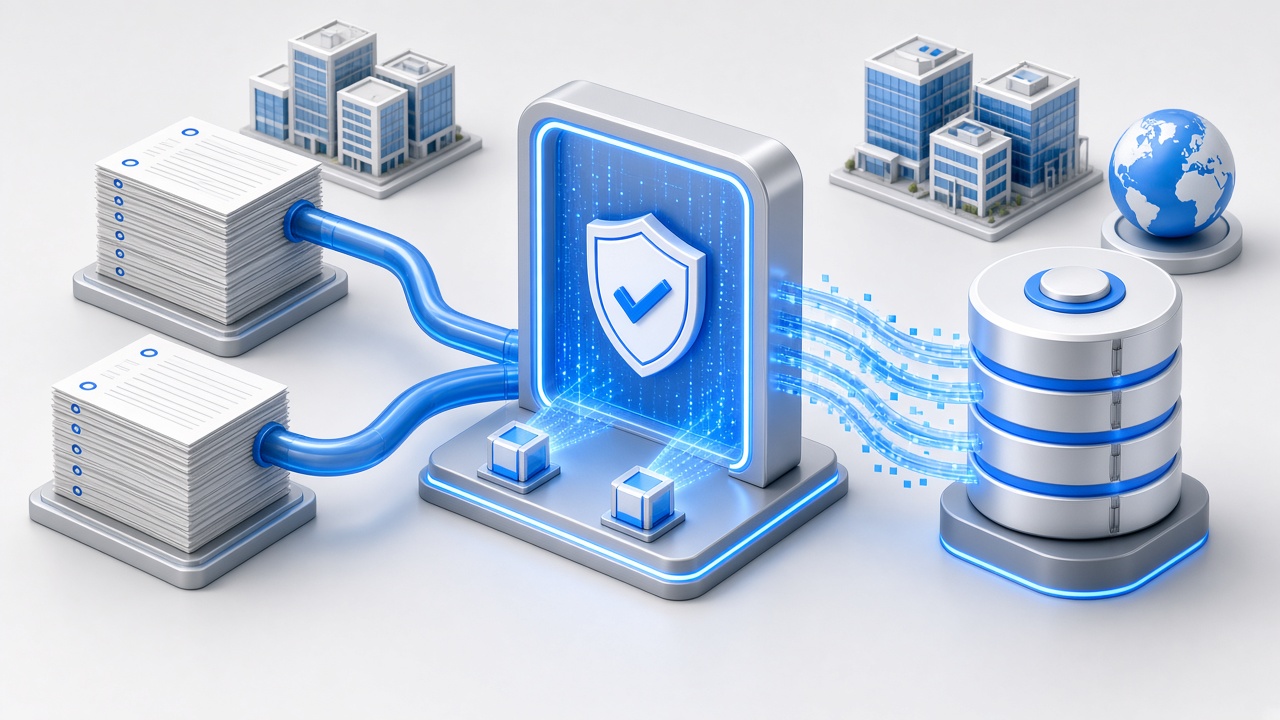
Business Partner is the only way to maintain customers and suppliers in SAP S/4HANA. For ECC conversions, Customer-Vendor Integration (CVI) is the gate: until every relevant customer and vendor is synchronized to a Business Partner, the conversion cannot proceed.
Why CVI is a finance problem, not just a master data task
Customers and vendors carry the open items, payment terms, tax numbers and bank details that finance depends on every day. If the synchronization is rushed, the damage shows up after go-live as blocked payments, wrong dunning, duplicate partners and audit findings.
What has to be decided before synchronization
- BP groupings and number ranges. Decide whether Business Partner numbers will match legacy customer and vendor numbers. Matching numbers make reconciliation and user adoption much easier.
- BP roles. Map which roles each partner needs, such as financial accounting customer, supplier, or both.
- Customer-supplier relationships. Partners that are both customer and vendor should become one Business Partner with two roles, not two duplicates.
- Contact persons and addresses. They follow their own mapping and frequently fail on incomplete or inconsistent data.
- Tax and bank data. Validate formats before synchronization; this is where many errors cluster.
How the synchronization usually runs
- Run the SAP pre-checks for CVI to find configuration and data gaps early.
- Complete the CVI customizing for both directions of integration.
- Clean and deduplicate customer and vendor master data, including archived or obsolete records you will not carry forward.
- Synchronize in the source system with the synchronization cockpit, monitor errors, fix, and rerun.
- Reconcile counts and key fields before the technical conversion starts.
FAQ: Business Partner and CVI
Can we skip CVI if we plan to clean data after go-live?
No. For a system conversion, CVI synchronization is a prerequisite. Cleaning after go-live is possible, but the synchronization itself must be complete beforehand.
Do transactions like XD01 and XK01 still work?
In S/4HANA, customer and vendor maintenance is redirected to the Business Partner transaction. Training and authorization roles must be updated accordingly.
How long does CVI take?
It depends on data volume and quality. The technical run is often fast; cleansing, decisions on numbering and error resolution are what take weeks. Start early in the project.
CVI is where many S/4HANA timelines slip quietly. Treat it as a finance-owned workstream with clear decisions, not a background job.
Contact advisory if you want a practical review of your finance design before it is locked into production.